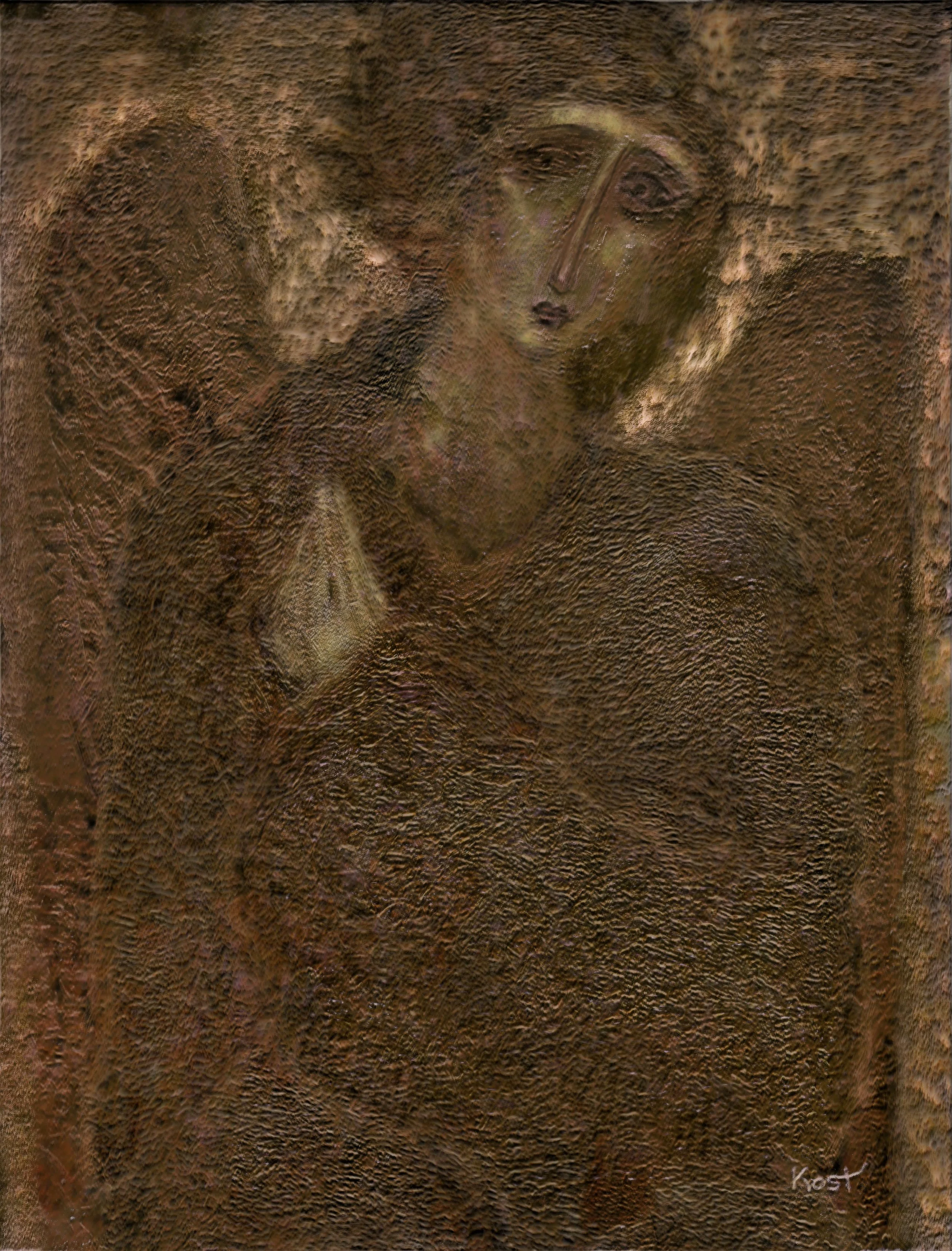
In Angel in Gold, the figure emerges as if from within an ancient patina—an apparition rendered through the language of texture, erosion, and divine restraint. The composition evokes the haunting solemnity of Byzantine iconography while transcending it, allowing the celestial to appear not as spectacle, but as endurance. The angel’s form, softly dissolving into a field of gilded umber and earthen radiance, becomes less a body than a relic of spirit—something that has withstood centuries of human touch, prayer, and silence.
The facial structure, attenuated and otherworldly, recalls the canonical proportions of Constantinopolitan mosaics, yet the handling of surface and tone pushes the work into an archeology of the sacred. Gold, here, is not ornamental. It is elemental—an alchemical ground suggesting transfiguration, the very light that both conceals and reveals. The subtle gesture of the hand at the breast intimates an inward invocation, a moment of unspoken witness rather than proclamation.
The texture, almost sculptural in its density, evokes a surface that has absorbed time itself. The visual language bridges icon and ruin, conveying the fragility of divine presence in the material world. There is a profound quiet in this work—a stillness that resonates less as depiction and more as visitation. The angel seems both ancient and immediate, a manifestation of faith’s endurance through the decay of matter.
In its synthesis of Byzantine austerity, modern abstraction, and existential resonance, Angel in Gold becomes not simply an image of the sacred, but a meditation on its persistence: how light endures even when buried within the darkness of history and human grief.
In Angel in Gold, the figure emerges as if from within an ancient patina—an apparition rendered through the language of texture, erosion, and divine restraint. The composition evokes the haunting solemnity of Byzantine iconography while transcending it, allowing the celestial to appear not as spectacle, but as endurance. The angel’s form, softly dissolving into a field of gilded umber and earthen radiance, becomes less a body than a relic of spirit—something that has withstood centuries of human touch, prayer, and silence.
The facial structure, attenuated and otherworldly, recalls the canonical proportions of Constantinopolitan mosaics, yet the handling of surface and tone pushes the work into an archeology of the sacred. Gold, here, is not ornamental. It is elemental—an alchemical ground suggesting transfiguration, the very light that both conceals and reveals. The subtle gesture of the hand at the breast intimates an inward invocation, a moment of unspoken witness rather than proclamation.
The texture, almost sculptural in its density, evokes a surface that has absorbed time itself. The visual language bridges icon and ruin, conveying the fragility of divine presence in the material world. There is a profound quiet in this work—a stillness that resonates less as depiction and more as visitation. The angel seems both ancient and immediate, a manifestation of faith’s endurance through the decay of matter.
In its synthesis of Byzantine austerity, modern abstraction, and existential resonance, Angel in Gold becomes not simply an image of the sacred, but a meditation on its persistence: how light endures even when buried within the darkness of history and human grief.